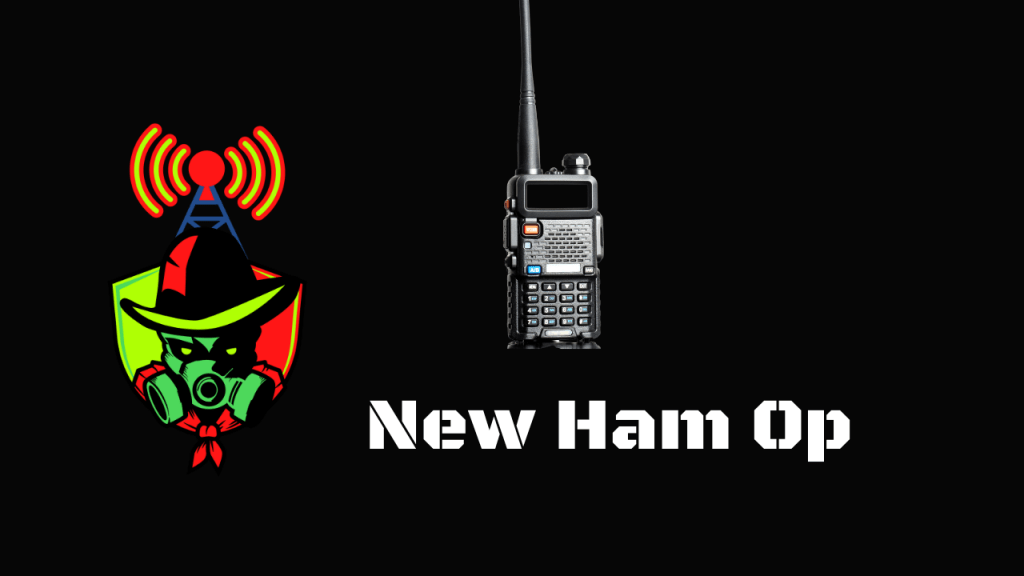
Hello Ham Radio Ops, Preppers, and everyone else listening today, I would like to welcome you to the K0MRD Radio Prepper blog. On this blog, I discuss communications for Preppers before, during, and after SHTF situations. I would like to begin and state why I have taken it upon myself to start this blog, as well as my small YouTube channel.
I am K0MRD and I have been an Amateur Radio operator since 2009. I hold a General class license from the FCC and I enjoy Amateur radio as both a hobby and a service. And by service, I mean that I am willing and able to lend what expertise I have to assist in communication should it ever be needed.
I am also a prepper and have been since 1998. Unlike those television shows that were big for a while, I do not prep for the End of the World As We Know It, instead I prep for the situations that can, and do happen every day. By that, I mean severe weather, auto accidents, and things of that nature. I do keep my eyes on the news to be aware of what is going on in the world because to do otherwise would be a disservice to yourself and your family.
So, how does someone become a ham radio operator? All it takes is a little bit of study, either self-study there are practice tests online that you can take for free at arrl.org, qrz.com, and hamradioprep.com, or a class with a local ham radio club. There may be a charge for the classes, so please contact your local ham club for information. Then you have to take a licensing test.
In a statement Per the ARRL dated 3/24/22:
Effective April 19, 2022, a $35 fee will apply to applications for a new Amateur Radio license, modification (upgrade and sequential call sign change), renewal, and vanity call signs. Further, the statement reads: There will be no fee for administrative updates, such as a change of mailing or email address.
Once you pass the test, you are issued a license and a call sign by the FCC. Once you have the license and call sign you can transmit on the ham bands.
You do not have to know anything about radio or electronics to get into amateur radio. Also, since 2007 you no longer need to pass a Morse Code test to become a ham radio op. You will learn about radio waves, RF radiation, and antenna theory. It is much easier than it sounds, and it is mostly memorization. You get hands-on experience once you get your license and your first radio.
There are three levels of licenses in amateur radio they are:
Technician, this is the first license you receive. You must pass a 35-question test on radio theory, regulations, and operating practices. This license gives access to all Amateur Radio frequencies above 30 Megahertz. You will also have HF voice privileges on the 10-meter frequency from 28.300 MHz to 28.500 MHz, so you can get a feel for how HF works, and the excitement of long-distance communications. As A Tech you have CW privileges on the 10 Meter, 15 Meter, 40 Meter, and 80 Meter frequency bands.
General, this is the second license level. You must, again, pass a 35-question test, as well as already hold a Technician license. Being a General license holder gives you some operating privileges on all Amateur bands and modes. This level of license also opens the door to worldwide communication. (This is the license level I currently hold).
Extra, this is the highest level license. You must pass a 50-question test and have the previous two licenses. With this level, you have access to all operating privileges on all Amateur bands and modes of communication.
In the prepping community, there is great information on First Aid, Gardening, Water Conservation, and much, much more. All of it is great information, but the one prep that seems to be lacking is communications. I mean true knowledge on how comms work, or the fact that to use the UV-5R, one needs to have a license from the FCC.
There are a lot of Preppers who have purchased A UV-5R dual-band radio expecting to be able to communicate over a long distance. With these types of radios, that is not likely to happen as there are best suited for local communications.
Radio to radio also called Simplex, the range is limited to maybe 1 to 5 miles depending on terrain. With repeater access, that range can be extended up to 30 + miles in area.
A repeater is a device that receives low-power transmissions and transmits them at high power and higher elevation. The repeater is usually set on top of a high antenna, a tall building in a major city, or on a hill or mountain top in rural areas.
To access a repeater, one needs to know both the Uplink (listening) frequency and the Downlink (Transmitting) Frequency and the offset, or the difference between a radio channel’s receive and transmit frequencies, as well as CTCSS Tones that the repeater owner may have set.
Without this information, you will not be able to connect your radio with the repeater at all. And that is the part that some in the Prepper community do not understand.
These Preppers will buy their radios (very positive) and put them away in with their other preps and forget about them until the radios are needed. Those Preppers do not practice with their radios as they would with other preps. Then when the time for the radios are used, they have no clue how to program them and use them efficiently and effectively.
This is the reason I have started this podcast and my YouTube channel to give the Prepping community the correct information to use their radios, and the airwaves, in a manner that is not only following the law but to use them in a manner that allows concise communication before, during and after an SHTF situation.
I hope that I’ve piqued your interest in this endeavor, and I hope that you will come along on this journey with me. If you are interested in checking out my YouTube channel the address is:
https://www.youtube.com/c/K0MRDRadioPrepper
This is K0MRD your Radio Prepper, signing off, 73!
 K0MRDRadioPrepper
Leave a comment